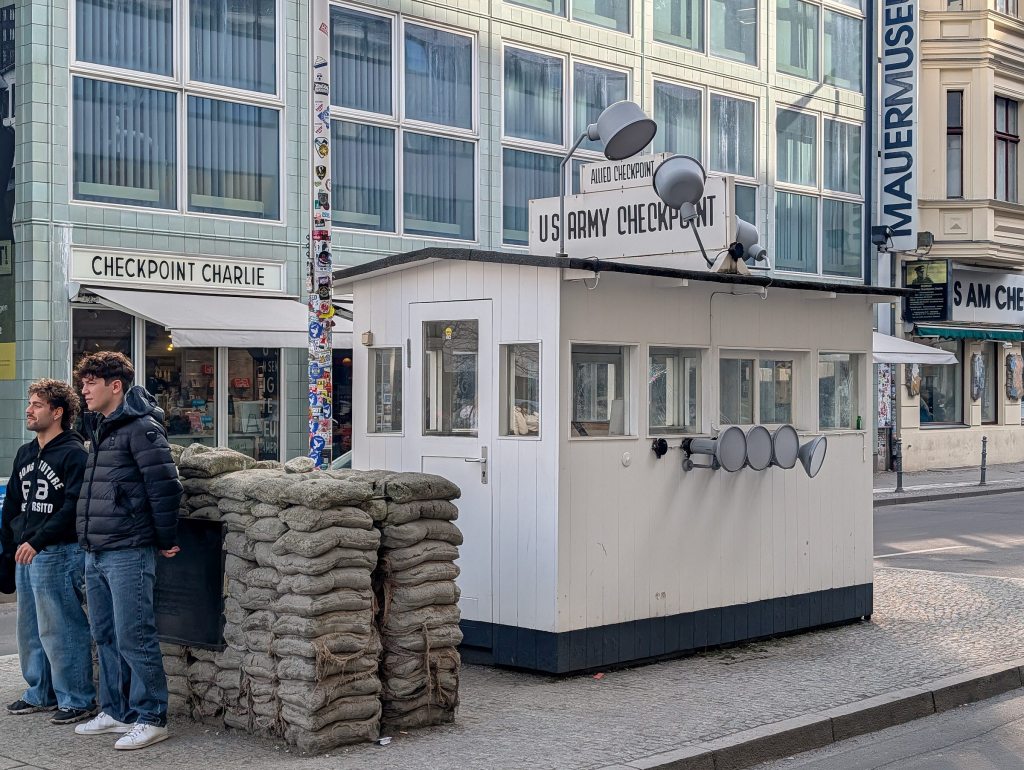
On a recent trip, I was privileged to be dumped at the Berlin Haupbahnhof (Central Train Station) for a two-hour wait until my next train connection. While I love me some HBF action – reading magazines at the newspaper stands and grabbing an off-flavored iced coffee at Dunkin’ Donuts – I could not escape that particular city without visiting a Cold War monument: Checkpoint Charlie.
A brief history refresher – at the end of World War II, what was left of Germany was sliced and diced by the victorious Allies (U.S., Great Britain, France, and <shudder> the Soviet Union) to ensure demilitarization, denazification, and democratization of Deutschland. The Allies also agreed to slice-and-dice up Germany’s capital of Berlin under wartime agreements, creating four separate zones within the city. With both the country and the city of Berlin, the U.S., Great Britain, and France, agreed to consolidate their holdings and cooperate – leaving the Soviet Union as the hold-out and causing Germany and Berlin to be split into East and West.
[I’m summarizing for the sake of brevity, laziness, and my forthright aversion to using AI-generated summaries. Lots-o-books, lots-o- videos describe what I attempted to briefly state above. Go do some research.]
From the end of the war until 1948, citizens in Berlin lived in a weird situation where they could work in one end (East) of Berlin, yet live in the other (West) or vice versa. Getting to work and back home could be a bitch, as the Germans were still seen as a problematic population stemming from wartime atrocities and hatred from the Soviets and Allies.
In 1948, the Soviets attempted to blockade the city and force the Western Allies (UK, GBR, FRA) to withdrawal. This action – stopping rail and road traffic – was aimed a strangling the city of resources, so the citizens of Berlin would capitulate and accepted Lord Josef Stalin as Chief Cook and Bottle Washer… er… Savior of the German people.
If you’ve spent more than 15 minutes in the U.S. Air Force, you’ll hear how the Berlin Airlift became the nascent organization’s finest moment only minutes after standing up as a separate military service (Ok… it was a few months after their birthday on September 18, 1947). For 15 months, cargo aircraft from the U.S. Air Force and Royal Air Force hauled enough food, fuel, and supplies to keep the city of Berlin alive.
National Museum of the United States Air Force: Berlin: City Held Hostage
(When I was a volunteer at the NMUSAF about twenty years ago, I stared at these displays for hours and did not really get it… not understanding the enormous undertaking by U.S. and Great Britain to keep their former adversaries alive and functioning to prevent former allies from taking over.)
After the Allies showed their gumption in keeping the citizens of Berlin alive (15 months, 2.3 million tons of coal, food, supplies and 101 fatalities), the Soviet Union backed down and allowed rail and road traffic to flow to the city. And here we start our story.
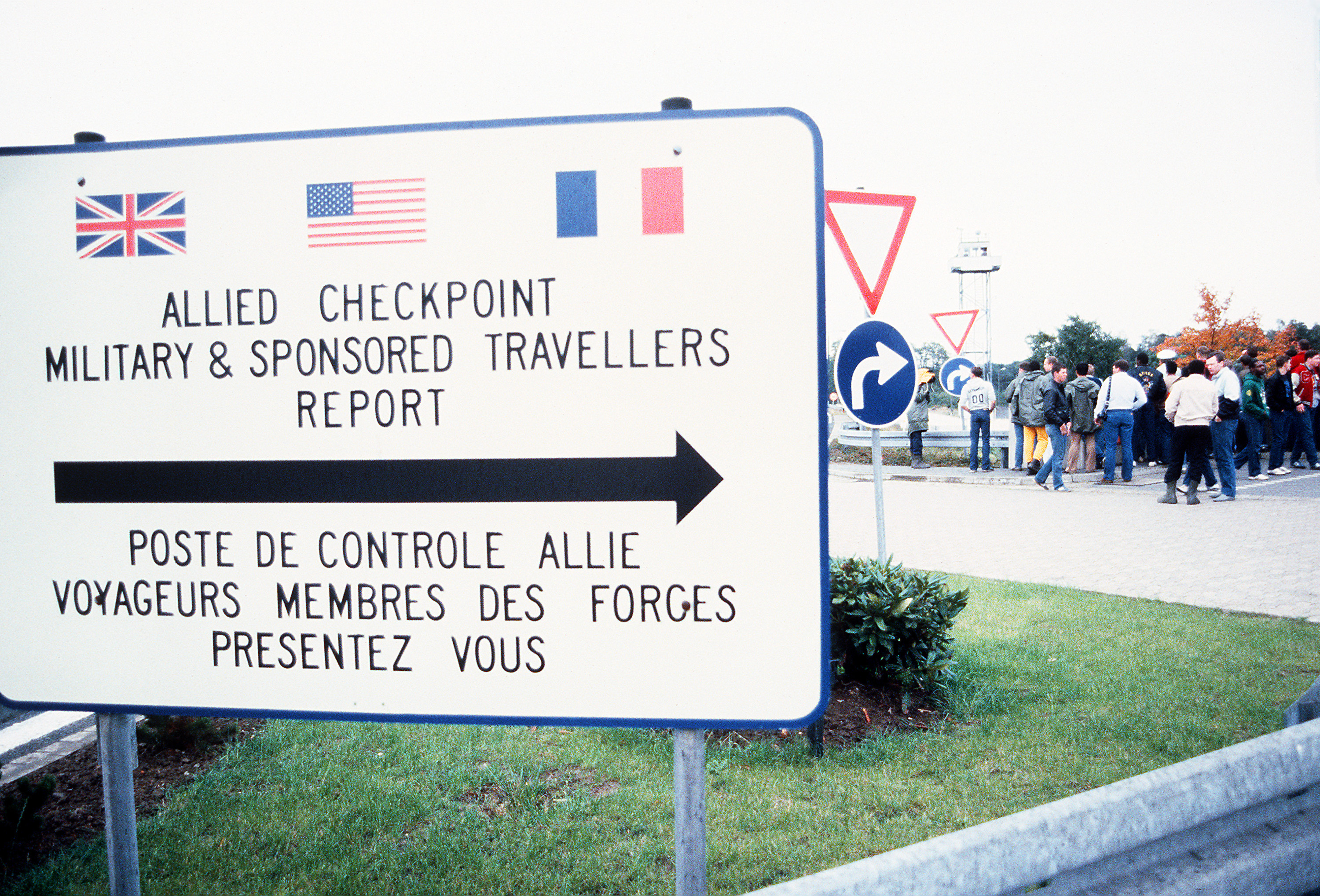
Three points of Entry into Berlin were created. As you drove along the Helmstedt–Marienborn autobahn (highway) toward Berlin, you stopped at Checkpoint Alpha.
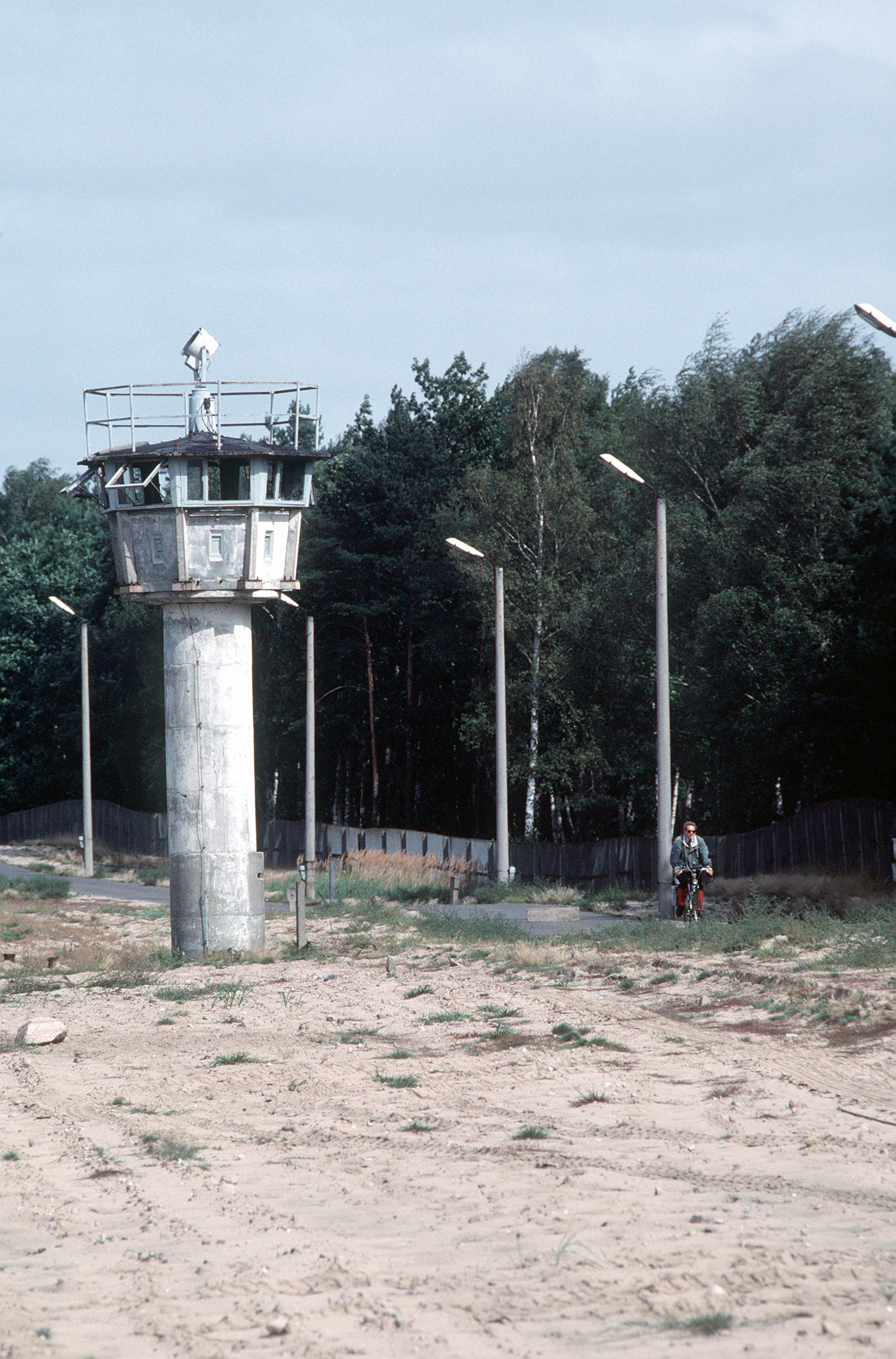
A entry point on the Teltow Canal, on the main route towards West Berlin from Helmstedt in the British sector of West Germany was designated Checkpoint Bravo (also historically known as the Hamelin Bridge Checkpoint).
And the star location of our tale: Checkpoint Charlie was on Friedrichstraße at the dividing line between East and West Berlin. The location took on a mythology of its own after the 1961 standoff between the U.S. and Soviet Union, and the many, many, many escape attempts over the Berlin Wall.
During German Reunification, Checkpoint Charlie also became place of crossing for Easterners going to the West side of Berlin.
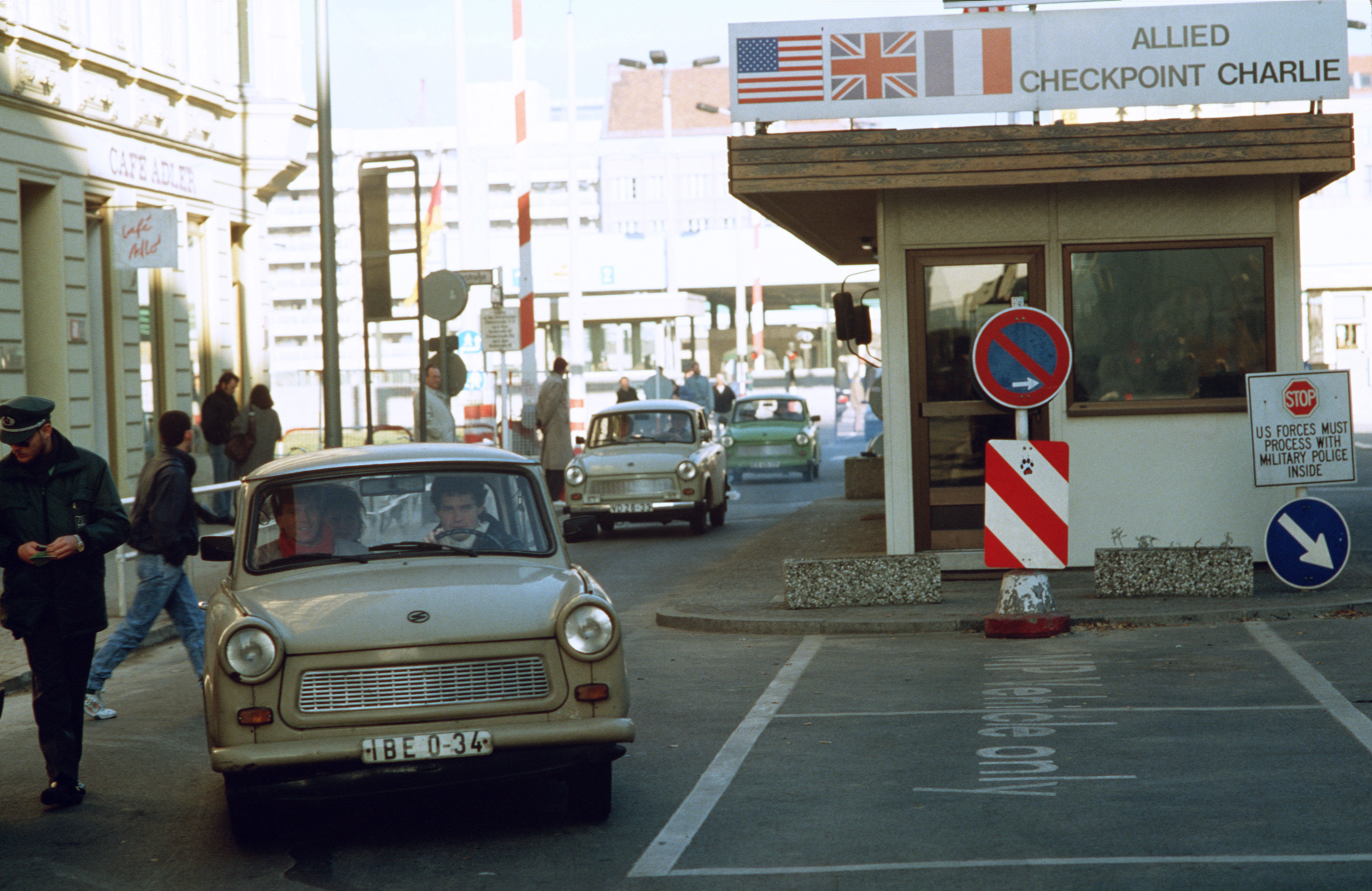
The location stood in as a physical manifestation of an ideological divide between the East and West, within Berlin…Germany… and the World at large.
So, there I was in the late 1980s… as distorted as a Cold War Kid could be be. Mentions of Checkpoint Charlie within spy thrillers, action movies, and political yarns created this mental image of a portal to Never, Never Land, or as best as my mind could make out. I think Jamie Lee Curtis (uncredited, of course) said it best during the introduction to Escape From New York:
“The rules are simple: once you go in, you don’t come out.”
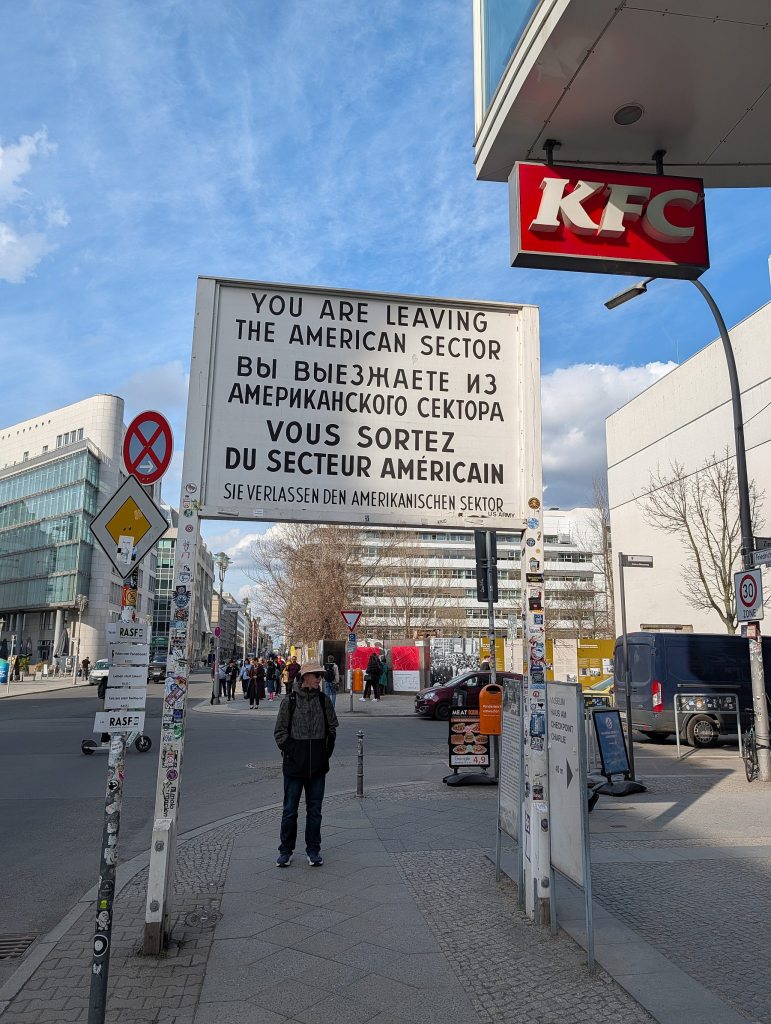
The words “You are Leaving the American Sector” sounded ominous to an adolescent, as if it was a mix between the Wild West, the aforementioned Never, Never Land, and the Great Wide Open… what was expected could not be readily imagined.
As the fog of immaturity lifted (and the reality of adulthood moved in), I gained a little more understanding of the passage between East and West Berlin. You could go in (and many people did), and come back out.
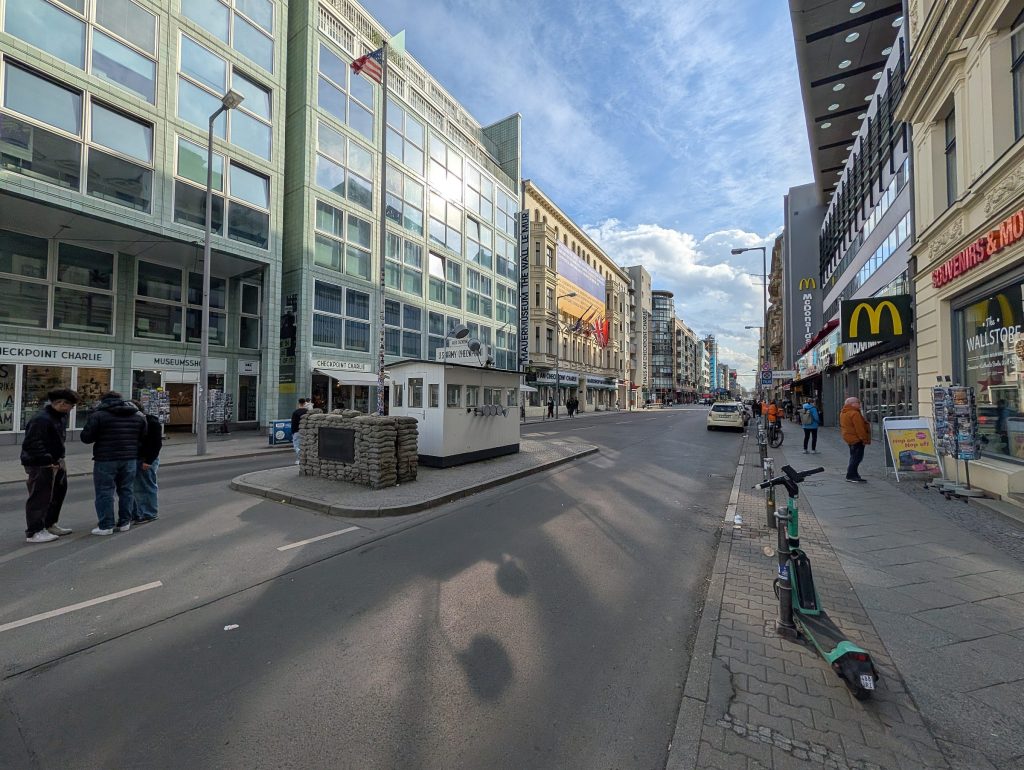
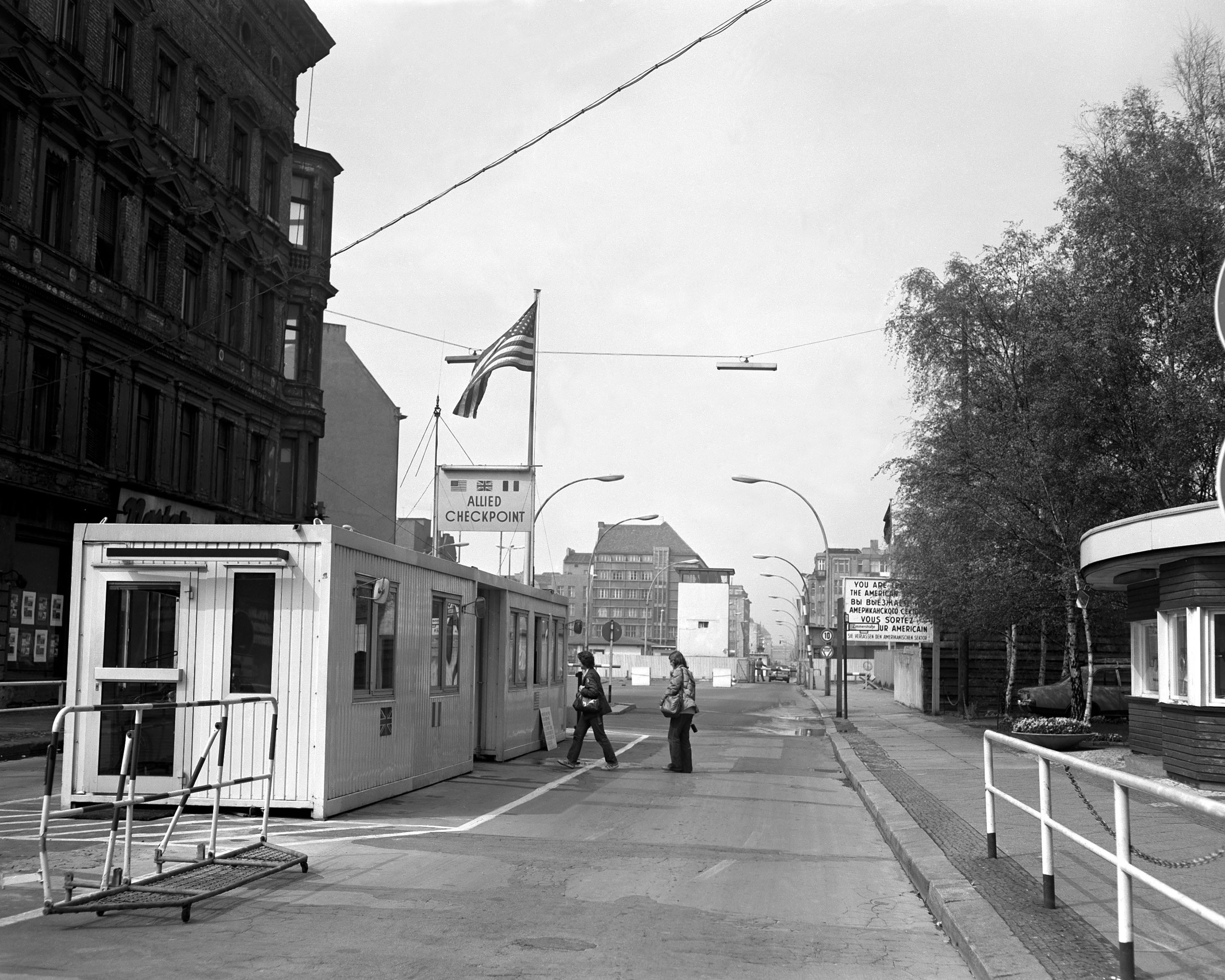
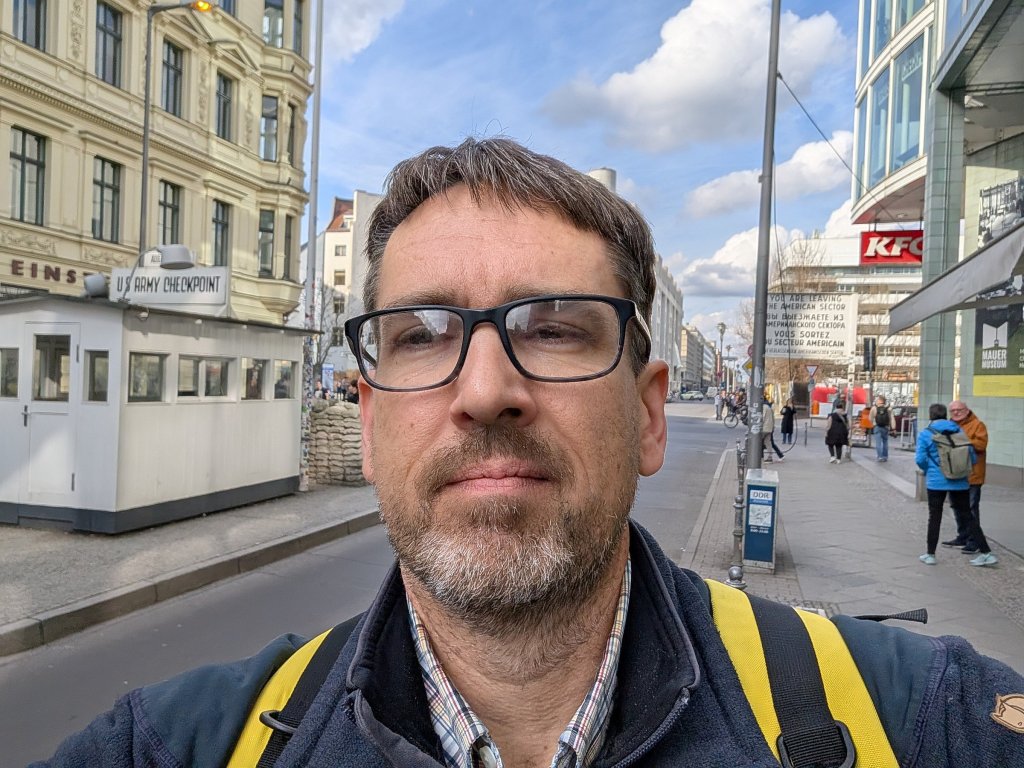
I purchased ein buch (book) at Die Mauer (The Wall) museum that details the history of the Berlin Wall, written by a forward-thinking man who started a Berlin Wall museum (originally named Haus am Checkpoint Charlie…House at Checkpoint Charlie) in the months after the building of it. It looked like an interesting read, and worth the euros spent on it.
I spent a grand total of 20 minutes at the intersection of Friedrichstraße und Zimmerstraße before heading back to Berlin HBF on the U-bahn. It was oddly fulfilling to see the sign welcoming me back to the American Sector (flip side of the sign), smack dab in the middle of a (long past) reunified Berlin.
My inner Historian is satisfied with the short visit to Checkpoint Charlie. However, my inner geek is still wondering if this place is the entry into Never, Never Land (or Earth Prime), where I could run into my doppelgänger…

 Joseph T. Page II